

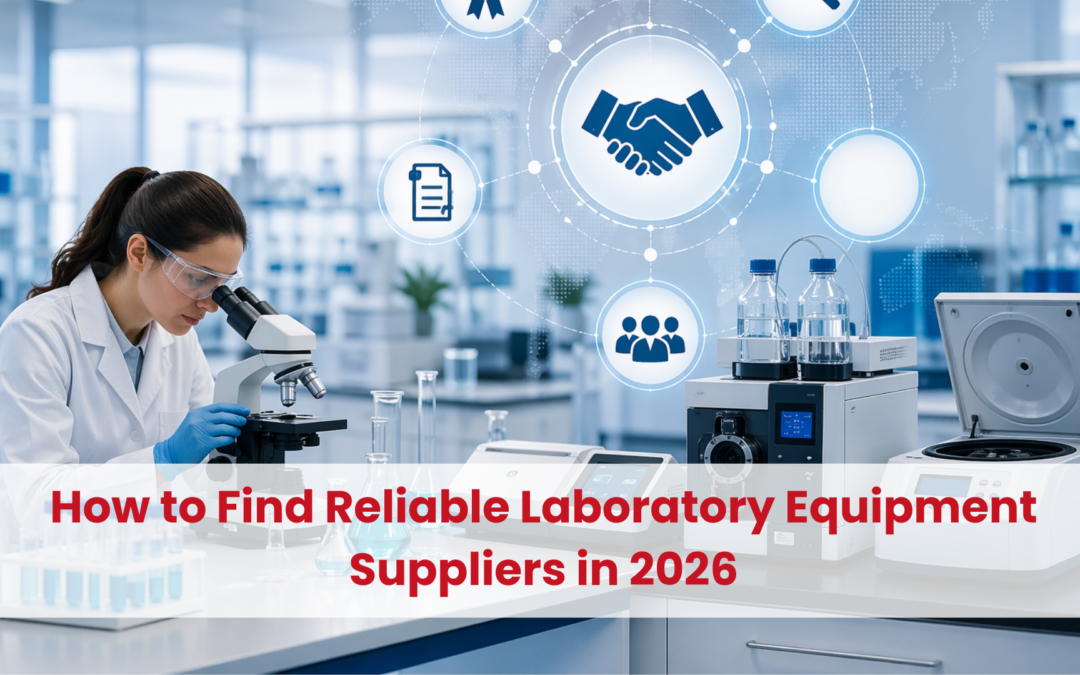
Building a laboratory, whether for an educational institution or a specialized research facility, is an exercise in precision. Every experiment’s success rests on the shoulders of the tools used to conduct it. As we navigate 2026, the landscape for sourcing scientific tools has evolved. The market is saturated with options, yet finding a partner that balances technological advancement with steadfast reliability remains a subtle art.
At inspirephysics, we understand that a laboratory is more than just a room filled with glassware and sensors; it is a space where curiosity meets reality. To help you navigate this journey, we have outlined the essential considerations for identifying the right Laboratory Equipment Suppliers who can support your vision for years to come.
1. Prioritize Technical Support Over the Price Tag
In the modern procurement cycle, it is tempting to gravitate toward the lowest bid. However, in the scientific community, the “cost” of an instrument includes its downtime. A reliable supplier in 2026 isn’t just a vendor; they are a support system.
When vetting Laboratory Equipment Suppliers, look beyond the initial transaction. Ask about their post-purchase ecosystem:
- Do they offer on-site calibration services?
- What is the typical lead time for replacement parts?
- Do they provide technical training for your staff or students?
A supplier that offers a calm, intelligent approach to troubleshooting is far more valuable than one that simply ships a box and disappears. Reliability is measured by how a company stands by its equipment six months after the invoice is paid.
2. Verify Compliance and Certification Standards
The regulatory environment for scientific research continues to tighten. In 2026, international standards for safety and precision are non-negotiable. Whether you are sourcing basic physics apparatus or high-end analytical chemistry tools, ensure your supplier adheres to recognized benchmarks such as ISO certifications or CE marking.
A trustworthy partner will be transparent about their supply chain. They should be able to provide documentation regarding the materials used and the quality control processes each item undergoes. At inspirephysics, we believe that transparency is the hallmark of intelligence in business. If a supplier is hesitant to share certification details, it is usually a signal to look elsewhere.
3. Seek Future-Proofed Technology
The equipment you purchase today should be compatible with the digital integrations of tomorrow. We are seeing a significant shift toward “Smart Labs,” where data is logged automatically via cloud-based systems.
Reliable Laboratory Equipment Suppliers are those who stay ahead of the curve. They should offer equipment that features:
- Digital interfaces for seamless data export.
- Sustainable power consumption models.
- Modular designs that allow for future upgrades rather than total replacements.
Investing in forward-thinking tools ensures that your laboratory remains relevant and functional as pedagogical and research methods evolve.
4. Evaluate Industry Reputation and Peer Reviews
In a world of polished digital marketing, the most honest insights come from the community. Reach out to colleagues at other institutions or research centers. Word-of-mouth remains one of the most effective ways to separate the “salesy” distributors from the genuine partners.
Check for long-term partnerships. If a supplier has been providing equipment to a major university for a decade, it speaks volumes about their consistency. Look for reviews that mention “durability” and “responsiveness.” A supplier might have the most advanced catalog in the world, but if their equipment breaks under routine use, it fails the reliability test.
5. The Importance of a “Human-First” Relationship
There is a growing trend toward automation in the procurement process, but scientific equipment is too specific for a purely algorithmic approach. You need to speak with people who understand the physics and the chemistry behind the tools.
At inspirephysics, we advocate for a warm and collaborative relationship between the lab manager and the supplier. A reliable supplier should be willing to listen to your specific curriculum or research goals and suggest the most appropriate tools—even if it means suggesting a less expensive, more durable alternative over a flashy, overpriced one. This level of honesty is what builds a lasting professional bond.
6. Logistics and Sustainability
In 2026, the environmental impact of shipping and packaging is a major consideration. Reliable suppliers are increasingly adopting green logistics. This includes biodegradable packaging for fragile glassware and consolidated shipping to reduce carbon footprints.
Furthermore, consider the physical location and distribution network of the Laboratory Equipment Suppliers. A supplier with a localized warehouse or a robust regional distribution network can offer faster shipping and lower costs, ensuring that your lab’s workflow isn’t interrupted by month-long shipping delays.
Final Thoughts
Finding the right equipment partner is a foundational step in the life of any scientific endeavor. It requires a balance of hard data—such as technical specs and certifications—and “soft” indicators like communication style and ethical standards.
By focusing on long-term support, technological integration, and a human-centered approach, you can ensure that your laboratory is equipped to inspire the next generation of thinkers. We invite you to explore these standards further at inspirephysics, where our commitment to scientific clarity and quality remains our guiding principle.
Choose your partners wisely, and your laboratory will become a sanctuary for discovery, precision, and growth.
