
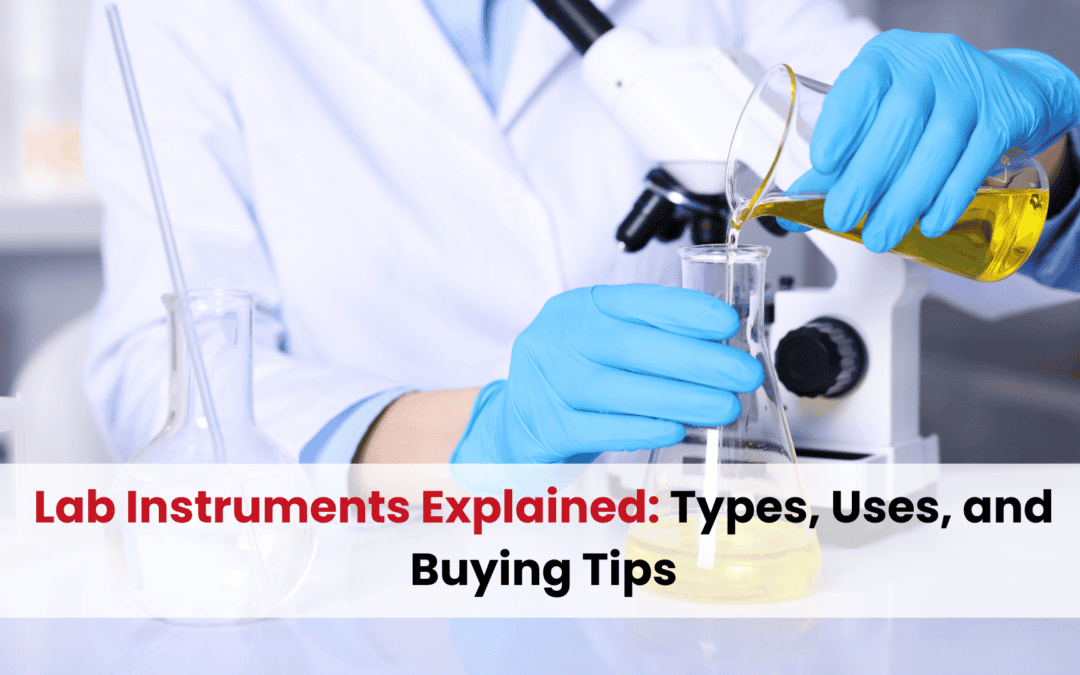
Precision is the heartbeat of every scientific discovery. Whether you are a student stepping into a physics lab for the first time or a seasoned researcher refining a complex experiment, the tools you use define the reliability of your results. At inspirephysics.com, we believe that understanding the “why” behind your equipment is just as important as the “how.”
Navigating the world of Lab Instruments can feel overwhelming given the sheer variety of technology available today. This guide aims to simplify that landscape, offering a calm and clear look at essential tools, their applications, and how to make informed decisions when it’s time to upgrade your workspace.
The Essential Categories of Lab Instruments
Every laboratory, regardless of its specific focus, relies on a core group of instruments designed for measurement, observation, and analysis. To build a functional workspace, it helps to categorize these tools by their primary purpose.
1. Analytical Instruments
These are the heavy hitters of the lab. Analytical instruments are used to identify the composition of a sample or to quantify a specific component within it. In a physics context, this might include spectrometers that measure the properties of light or oscilloscopes that allow you to visualize signal voltages.
2. Volumetric and Measurement Tools
Accuracy starts with measurement. From the humble graduated cylinder to high-precision digital balances, these tools ensure that every variable is accounted for. Digital scales, for instance, have replaced mechanical beams in most modern settings because they offer quicker readings with a much lower margin of error.
3. Separation and Processing Equipment
Often, a sample isn’t ready for analysis in its raw state. Instruments like centrifuges, filters, and stirrers are used to prepare substances. In many physics and material science labs, magnetic stirrers with heating plates are essential for creating uniform solutions at specific temperatures.
Common Lab Instruments and Their Uses
Understanding the specific role of each piece of equipment helps in maintaining a seamless workflow. Here are a few staples you will find at inspire physics:
- Oscilloscopes: Vital for anyone studying electronics or wave mechanics. They provide a graph of an electrical signal, showing how it changes over time.
- Spectrophotometers: These measure how much a chemical substance absorbs light by measuring the intensity of light as a beam passes through a sample solution.
- Microscopes: While often associated with biology, high-powered microscopes are crucial in physics for examining the surface tension of fluids or the crystalline structures of new materials.
- Power Supplies: A stable source of DC or AC voltage is the backbone of any physics experiment involving circuits.
The Art of Choosing: Buying Tips for Lab Instruments
Investing in laboratory equipment is a significant commitment. It isn’t just about the price tag; it’s about the long-term viability of your research or educational programs. Here is how to approach the purchasing process with a calm and strategic mind.
Prioritize Precision over Frills
It is easy to be swayed by the latest digital interfaces or “smart” features. However, the most important metric for any lab instrument is repeatability. Does the instrument provide the same result under the same conditions every time? Look for equipment with high-quality sensors and robust calibration options.
Consider the Total Cost of Ownership
The initial purchase price is just the beginning. Before committing, ask:
- How often does this require professional calibration?
- Are the consumables (like filters, bulbs, or reagents) easily accessible and affordably priced?
- Does the manufacturer offer a reliable warranty and local technical support?
Scalability and Compatibility
Science is rarely static. If you are buying a data logger today, ensure it has the ports and software compatibility to work with the sensors you might add next year. Standardized connections (like USB-C or BNC) are usually safer bets than proprietary formats that lock you into one ecosystem.
Maintaining Your Equipment
Once you have acquired the right tools, longevity depends on care. Laboratory environments can be harsh—chemical fumes, dust, and temperature fluctuations all take a toll.
- Routine Calibration: Even the best instruments “drift” over time. Establish a monthly or quarterly schedule to check your equipment against known standards.
- Cleanliness: A single speck of dust on a lens or a residue of oil on a sensor can ruin a week’s worth of data. Use dedicated cleaning kits specifically designed for optics and electronics.
- Storage: When not in use, sensitive electronic instruments should be covered and stored in a low-humidity environment to prevent corrosion.
Why Quality Matters at Inspire physics
At inspirephysics.com, we understand that the bridge between a theoretical concept and a proven law of physics is the experiment. If the tools are flawed, the bridge collapses. We advocate for a thoughtful approach to outfitting your lab—choosing quality over quantity and understanding the physics behind the measurement.
The right Lab Instruments don’t just sit on a bench; they empower you to ask deeper questions and find more accurate answers. Whether you are setting up a school lab or a private research facility, taking the time to understand your equipment is the first step toward true discovery.
Science is a journey of patience and precision. By choosing your instruments wisely and treating them with respect, you ensure that your contributions to the field are built on a foundation of integrity and truth. Explore more resources and guides at inspire physics as you continue your journey into the fascinating world of physical sciences.